Insoles with Orthotic Support for Achilles Tendonitis
Dr. Richard Sinclair worked in the Department of Sport, Exercise and Nutritional Sciences at the University of Central Lancashire in England. During his work, he regularly encountered runners with Achilles tendon pain.
Common symptoms include tight calf muscles and limited ankle movement when bending the foot. Medical professionals often call this condition Achilles tendinitis or Achilles tendonitis. The pain can interfere with daily activities and exercise. Therefore, many people look for supportive footwear and insoles to reduce strain on the tendon.
How Can Insoles Help with Achilles Tendonitis?
We offer a range of arch supports for Achilles tendonitis and other foot conditions, including plantar fasciitis. Our selection includes five shoe insoles worth considering for different support needs. Both men and women can benefit from well-fitting footwear. Choose comfortable shoes that suit your daily activities, whether you work in a formal setting or exercise regularly.
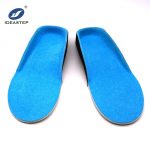
We provide over-the-counter arch supports and custom orthotics to help manage foot discomfort associated with Achilles tendonitis. The right design supports the foot and helps control excessive movement. Depending on the individual’s needs, a suitable orthotic may also absorb impact, support the arch, and reduce strain on the Achilles tendon.

Choosing the Right Heel Support
A well-designed insole helps maintain foot stability inside the shoe. Heel cups and heel lifts may also reduce tension on the Achilles tendon by adjusting heel position. However, the right choice depends on the cause and severity of the symptoms. Poorly fitting footwear or unsuitable insoles may cause additional discomfort, so choose products that fit your shoes correctly.
Athletes place considerable stress on their feet during training. Therefore, suitable footwear and orthotic support can play an important role in managing Achilles tendon discomfort. A well-matched insole may reduce pressure on the tendon while helping athletes maintain appropriate activity levels. Rest, stretching, and proper foot care also support recovery. Seek professional advice if pain persists or worsens.
Why Shock Absorption and Arch Control Matter
Reducing tension on the Achilles tendon forms an important part of many rehabilitation plans. Research supports the use of custom foot orthotics in selected cases. These devices can help manage excessive foot motion and reduce strain associated with twisting and rotational forces. Suitable footwear and shock-absorbing orthotics may also help distribute pressure more evenly.
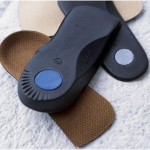
The IDEASTEP INSOLE Heel Lift helps raise the heel and cushion impact. Its design may help manage discomfort associated with Achilles tendonitis and sports-related heel pain. Depending on the product configuration, cushioning around the arch, metatarsal area, and heel can provide additional support. The appropriate material and design depend on the user’s foot structure and activity requirements.
What Does Research Say About Heel Lifts and Orthotics?
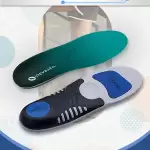
A study published in *Clinical Biomechanics* examined the effects of energy-absorbing insoles. IDEASTEP Green Performance Insoles also focus on foot support and motion control. Researchers have explored how custom arch supports and orthotic heel lifts affect running mechanics in people with flat feet.
Some studies have compared custom arch supports with orthopaedic heel lifts when examining Achilles tendon loading. However, researchers have not reached a consistent conclusion about how these devices change Achilles tendon loading. Previous research has investigated orthotic treatment for Achilles tendon problems, but findings vary across studies. The appropriate heel lift height and orthotic design depend on the individual’s condition and treatment goals.
Other Factors to Consider
Not every case of Achilles tendinitis results from exercise. Conditions such as rheumatoid arthritis and certain infections can also contribute to tendon inflammation. A healthcare professional can assess the Achilles tendon and identify possible underlying causes. During an orthotic evaluation, the clinician may also examine the lower portion of the tendon, where it attaches to the heel bone.
Store-bought insoles represent only one option for managing foot pain, including discomfort associated with plantar fasciitis. If non-prescription insoles do not provide sufficient relief, consult a healthcare professional for further assessment. Depending on the diagnosis, treatment may include appropriate footwear, orthotics, stretching exercises, or a night splint.